
Buying industrial land in Turkey: 12 site-tested checks every factory investor should run
Buying industrial land is not just a price-per-square-meter decision. Production profile, infrastructure capacity, logistics flow, zoning notes and exit scenario must be assessed together. 12 critical checks from 15 years on site in the Marmara industrial corridor.
Abdulbaki Yetis
Environmental Engineer | Real Estate Advisor
Good industrial land is a platform that can carry production, logistics, permitting and operational safety simultaneously. Investors get the right answer from file quality, not from price.
1. Clarify the production profile first
Industrial land decisions start with production profile, not with the land itself. Which process, which machinery, which power, which waste stream? Without these answers no land comparison delivers a meaningful result. A galvanizing plant and a food-processing facility cannot share the same industrially zoned parcel: one requires special-industry permission, the other requires neighboring-use compatibility.
The most common mistake I see on site: the investor picks the land first, then squeezes the process into the parcel. The correct order is the reverse. Define the production flow, covered area need, storage area, shipping cadence; then search for a parcel that carries that profile.
2. Read zoning function and plan notes carefully
Not every industrially zoned parcel allows every type of production. Plan notes may include restrictions such as 'no hazardous materials', 'no heavy industry', 'no storage', or specific environmental thresholds. A misalignment between the regional plan (1/100,000 or 1/25,000) and the parcel plan (1/1,000) can cause the investor's production model to be refused at the permit stage.
Plan notes are not just technical text; they are the rules that decide whether the investment can operate. A lawyer or technical advisor must read them line by line. Settling for an 'industrial zoning' stamp is expensive in the long run.
3. Parcel geometry and buildable footprint
A large parcel does not always translate into a large buildable footprint. Setbacks, plan-note reductions, road dedications, stream or power-line setbacks all shrink the usable area. Corner parcels lose more because they trigger setbacks on two facades.
On site I have seen this many times: a 10,000 m² parcel ends up with 5,500 m² usable for production after setbacks. If the investor needs 8,000 m² covered factory, this parcel will not work. This calculation must happen before the purchase contract is signed.
4. Power capacity and transformer access
Modern production facilities require high installed power. Steel, casting, plastics, chemistry processes routinely demand 500-3000 kVA. The capacity of the nearest transformer, the cost of extending a new line and the approval timeline directly affect the investment schedule.
Connection feasibility must be confirmed with TEIAS and TEDAS in advance. 'There is a line nearby' does not mean 'I will get the power I need quickly'.
5. Wastewater, stormwater and drainage
On parcels inside an industrial estate (OSB) wastewater flows to a central treatment plant. On standalone parcels the investor must build a private treatment plant. The characterization of the process wastewater (acid, heavy metal, organic load) determines the treatment design and cost.
Stormwater drainage is equally important. Parcels with steep grade differences, proximity to flood zones, or low soil permeability can double the standard infrastructure budget.
6. Logistics cycle and truck maneuvering
A factory's logistics capacity is measured by what is outside the building as much as inside. Heavy-vehicle access, turning radius, number of loading docks and waiting area determine throughput. A parcel with frontage on a 'nice-looking' main road can still kill efficiency if the turning radius is tight or the bridge clearance is too low.
7. Workforce access and shuttle cost
For facilities that need skilled operators, technicians and engineers, a workforce map is critical. Nearby vocational schools, OSB shared labor pools and accessible public transport must be evaluated. Over a 10-year horizon, shuttle service cost can reach into the millions of TL.
8. Environmental permit and EIA status
Depending on the process type, the project may fall under Annex-I or Annex-II of the Turkish Environmental Impact Assessment (EIA) Regulation. Full EIA can take 6-12 months; a Project Information File 1-3 months. These timelines directly affect the investment schedule. The Ministry of Environment, Urbanisation and Climate Change should be consulted early.
9. Fire access and hydrant infrastructure
Industrial fire safety requires fire-engine approach frontage, hydrant access and a fire-water tank. Without solving this at the planning stage, post-permit retrofits become expensive surprises.
10. Neighboring uses and compatibility risk
Nearby residential areas, schools, hospitals, agricultural fields or tourism sites can restrict the process type. During the Yildiz Demir Celik construction I saw this firsthand: nearby settlements imposed noise and emission constraints, and the production rhythm had to be reconfigured.
11. Development schedule and permit duration
The time from land acquisition to building permit, and from permit to occupancy permit, directly affects financing cost. In a high-interest environment a six-month delay can sink the exit scenario. Which parcels take how long, which permits can run in parallel — this must be modeled in advance.
12. Exit scenario and liquidity
Investment is evaluated by exit as well as entry. What is the alternative-use flexibility of the parcel? Which sectors would buy it? How does regional demand cycle behave? These questions must be asked at the acquisition stage, not when the time comes to sell.
Have a similar file?
Field discipline.
At the center of the decision.
Request a technical pre-assessment from Lizaz with the framework used in this article.
Author
Abdulbaki Yetis
Environmental Engineer · Founder, Lizaz Emlak
Roughly 15 years of industrial-construction site experience. Active assignments at DP World Yarimca port projects, Yildiz Demir Celik steel facility, the Tezcan Galvaniz plant and Symbol Kocaeli shopping mall + hotel + hospital mixed-use project. Reads real estate not as a listing, but as an engineering problem at the intersection of zoning, operations, infrastructure/environment and financing.
Practice areas: industrial real estate · factory and warehouse feasibility · OSB vs. off-OSB investment comparison · residential land and urban transformation · EIA and environmental permit assessment · strategic site selection across the Marmara corridor.
Other research
From the field.
More notes.
Abdulbaki Yetis Analysis
Floor-area-sharing and urban transformation contracts: 6 critical points for property owners from a technical investor's perspective
In urban transformation, the property owner's most critical decision is not which contractor they start with, but which contract they sign. The sharing ratio alone is not a sufficient measure; the land share (arsa payı), the permit timeline, the collateral, the delay penalties and the delivery quality must all be read on the same chart.
Abdulbaki Yetis Analysis
Industrial land decision matrix on the Gebze-Dilovasi-Tuzla corridor: zoning, infrastructure, logistics and environmental risk must be read together
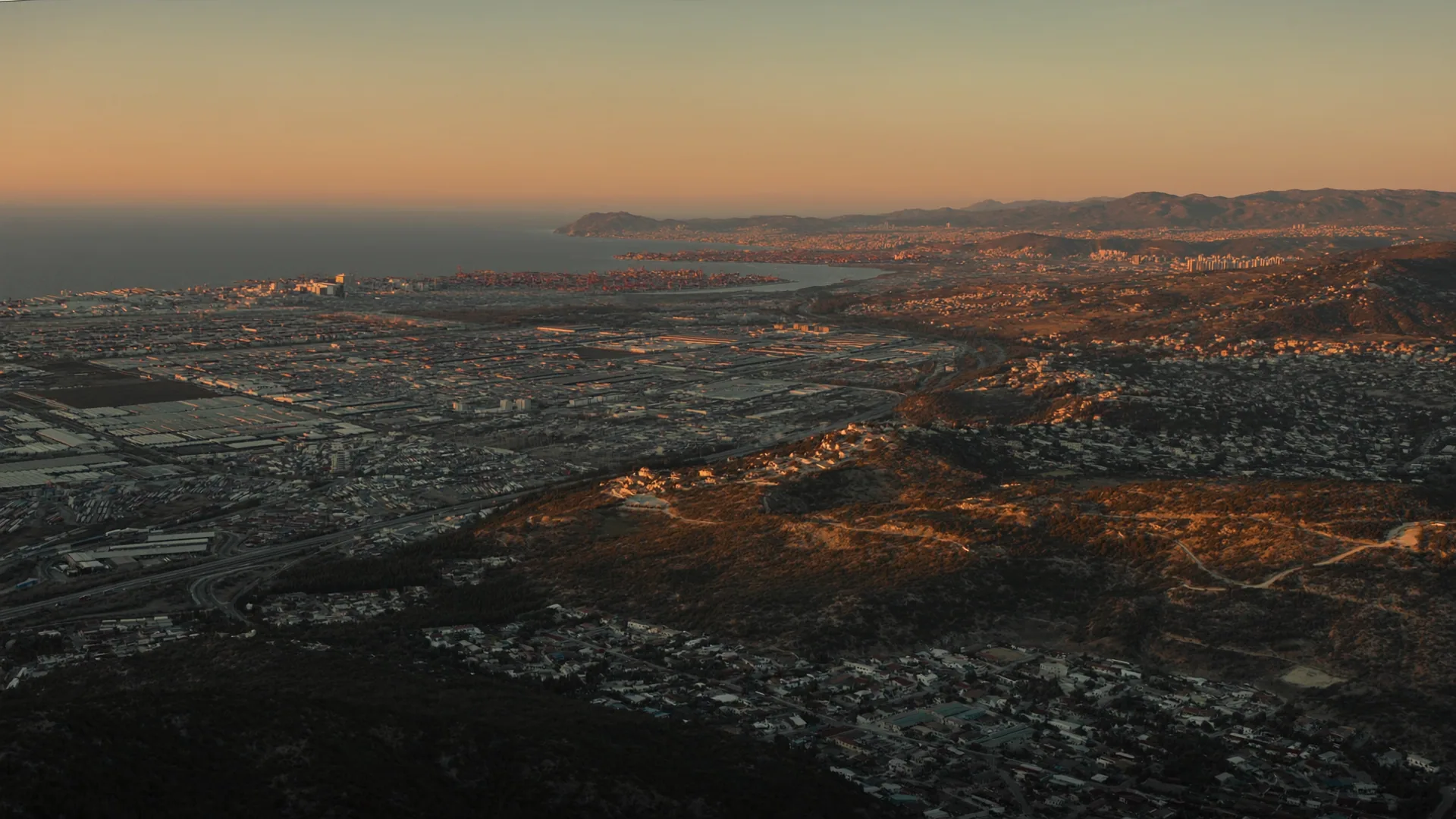
The right decision in industrial land is not made only by square meter price or visible location. On the Gebze, Dilovasi and Tuzla axis, value is understood by reading OSB access, port connectivity, energy capacity, zoning function, environmental permitting and development cost in one technical file.
Residential Land
Residential land and urban transformation feasibility: development rights, infrastructure, sales velocity and cash flow should be evaluated together
The value of residential land does not come only from floor-area ratio. Licensing schedule, infrastructure load, sales velocity, regional income profile and financing cost must be read in one feasibility file.